
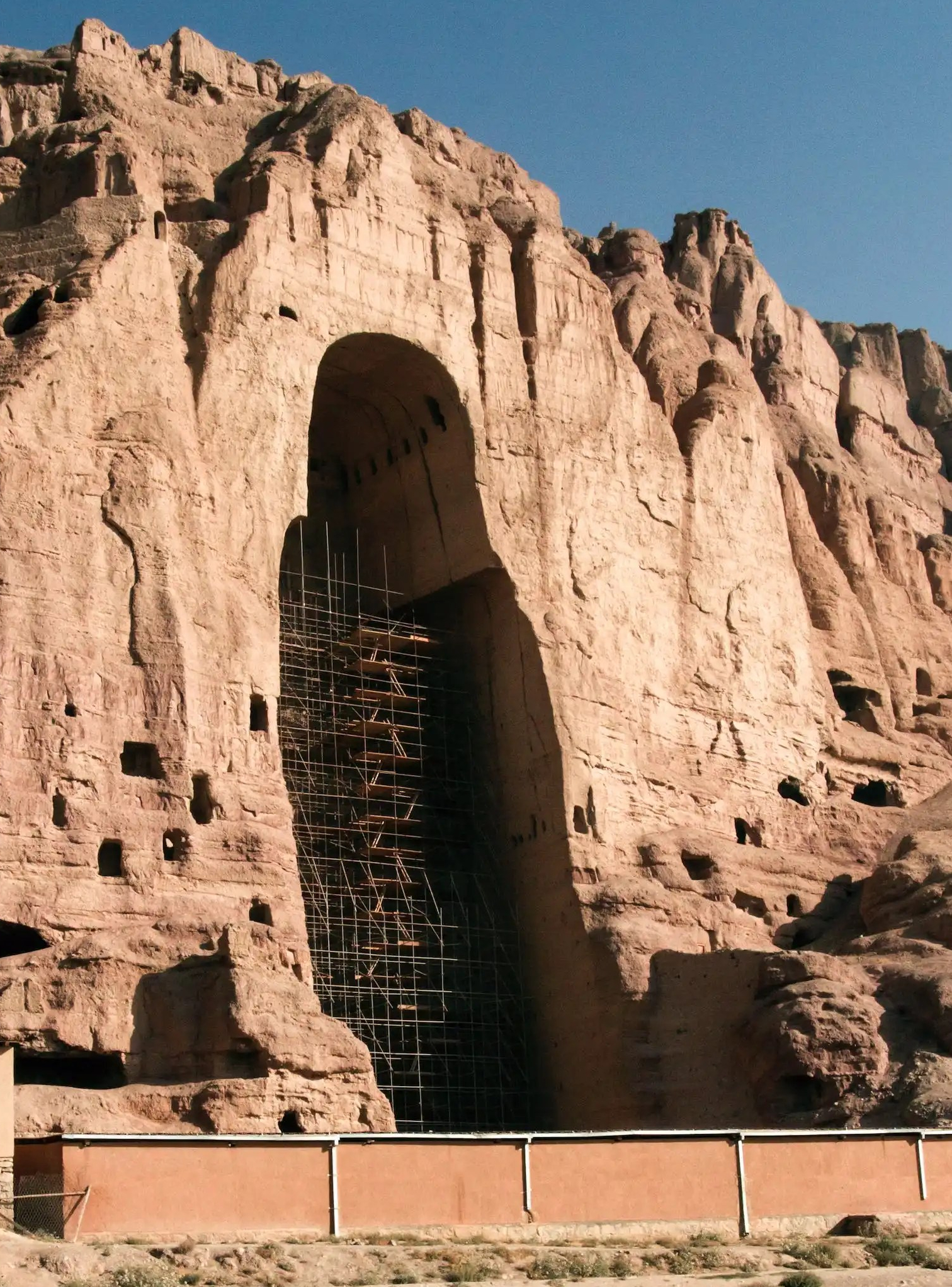
A look at the current Islamic Emirate.
2023 Gaza War. Each making us forget the last a little bit more, the Bakhmut frontline seems to harden, the Registan
Almost three years passed roughly — happy new year—following the Fall of Kabul. And since then, two more great events on the world stage have occupied the world’s mind: the 2022 invasion of Ukraine and the 2023 Gaza War. Each making us forget the last a little bit more, the Bakhmut frontline seems to harden, and the Registan Desert appears dustier. Both to keep your mind fresh and to keep myself accountable for an article I wrote back then. Let us take a dive into the reports about Afghanistan and remains positive about the situation in 2024.
The Recap
In August 2021, I wrote (controversially) about the positive potential of the Taliban takeover, also speculating a bit about the region more generally. In that article, I make the following claim: Though the Taliban created a theocratic state (the Islamic Emirate of Afghanistan, IEA, succeeded the Islamic Republic of Afghanistan), it was preferable to continued US presence and the continuation of 50 years of war. Along with the promises for better treatment of women than during the 1990s and an amnesty for enemies of the Taliban, as well as the clear desire to cooperate with foreign countries like China on matters such as commerce, this signaled a slightly more gentle hand than before. Take a hit in the short term, economically and socially, but crucially replace guns and skirmishes with peaceful religious debate about Sharia in the hopes that a more gentle Emirate might even leave space for a new civil society to grow in the following decades.
The Last Two Years
For some, parts of what really happened might seem predictable. Despite assurances and short-term measures protecting women’s position in society and a general amnesty the gentle hand of the Taliban did not materialize. Amnesty International[12] reports of killings and the situation of women seems no better than in the 90s, not to speak of LGBTQ rights and the issues faced by minorities, though those appear at least sometimes incidental except in the case of religious discrimination, not results of leadership decisions at high levels. In general the style of governance appears to follow that of the Emirate in the 1990s.

This seems unlikely to change, although, for what purports itself to be a unitary government, there seem to be issues of jurisprudence and executive enforcement in the IEA. Many laws are not clearly defined, and various authorities appear to be working independently [11], even though the Taliban’s Supreme Leader, Mullah Hibatullah Akhundzada, has made his presence increasingly felt [15]. That said, there is no opposition with the means to topple the Taliban currently since at least late summer 2023. There are positives as well; AP [7] reports that Afghanistan is more secure now than it was two years ago. Opium production plummeted [3] (though other drugs have seen an increase in production), and there has been some openness to journalists [2], at least where the Taliban think the story will be positive. With growing bilateral relations [8] as well as economic projects such as participation in China’s Belt & Road Initiative[4][5][6] better times could be ahead.
Not all is rosy, though, for the Taliban. Bilateral relations aside, no country has yet to fully recognize the Taliban, hampering both the economic projects planned with eastern countries and the possibility of unfreezing funds currently held by the West. The western countries are unwilling to move towards recognition, at least until greater freedom is guaranteed for women, while Pakistan is putting pressure on the IEA over increased terrorist activity since 2021 [16]. This concern over terrorism is likely shared by China; many of Afghanistan’s mineral resources have stayed untapped in the last 2–3 years, likely over such anxieties. To a large extent, the country is still dependent on humanitarian aid such as that provided by USAID [14].
In short: Though the story has been largely one of successes for the Taliban, it’s very clear that it has not yet achieved mature capabilities in governance, production and commerce, which makes the IEA government overreliant on intimidation. Diplomatic isolation has created a hardline leadership which spirals into a vicious circle affecting the timid benefits the economy has seen, such as deflation [17] Afghanistan has seen lately, while the government has not been able to effectively govern on all levels.
Is all lost?
I have, of course, to be reasonable, what I wrote in 2021 was certainly one part naive and at least one part long-term speculation which is hard to prove or disprove. Despite this, though, I would like to hold onto that second part. I share some parts of an opinion with AP’s Kathy Gannon- foreign actors need to engage with Afghanistan fully if there is to be hope for a civil society and potential change in Afghanistan’s overall structure. I also applaud her conviction to take such a stance after being shot in the country while she was reporting. Adding to this, some economic empowerment needs to occur in the IEA since dangling aid in front of Afghans will not ultimately lead to sustainable change, either the Taliban will grow past the need for it or they will infiltrate aid channels to gain access to funds not otherwise available.
Prosperity is what will create safety for people from food insecurity, political independence as well as the only internal chance for people to have the comfort to experiment with alternative political arrangements. And foreign actors will need to engage with the IEA to ensure that the US retreat did not simply hand over the reigns to a theocracy and to impart a positive influence over emerging classes within the country.
Sources:
- Previous Article:
https://andrejmarkov.com/2021/08/17/the-positive-potential-of-the-taliban-in-power/ - Popular Front: https://soundcloud.com/popularfrontcast/179-drugs-trade-in-the-talibans-afghanistan
- UN Office on Drug and Crime: https://www.unodc.org/unodc/en/press/releases/2023/November/afghanistan-opium-cultivation-in-2023-declined-95-per-cent-following-drug-ban_-new-unodc-survey.html
- Reuters:
https://www.reuters.com/world/asia-pacific/taliban-join-chinas-belt-road-forum-elevating-ties-2023-10-14/ - https://www.reuters.com/world/asia-pacific/taliban-plans-turn-former-foreign-bases-into-special-economic-zones-2023-02-19/
- https://www.reuters.com/world/audit-fails-win-us-backing-release-afghan-central-bank-funds-us-officials-2023-07-21/
- Associated Press:
https://apnews.com/article/afghanistan-taliban-takeover-anniversary-explainer-10711b53a73638f46f2eb534b15b1a63 - Tolo News:
https://tolonews.com/afghanistan-185769 - https://tolonews.com/afghanistan-186373
- European Parliament: https://www.europarl.europa.eu/RegData/etudes/BRIE/2023/747434/EPRS_BRI(2023)747434_EN.pdf
- EU Agency for Asylum:
https://euaa.europa.eu/coi-publications :
https://coi.euaa.europa.eu/administration/easo/PLib/2023_12_EUAA_COI_Report_Afghanistan_Country_Focus.pdf - Amnesty International: https://www.amnesty.org/en/location/asia-and-the-pacific/south-asia/afghanistan/report-afghanistan/
- https://www.amnesty.org/en/wp-content/uploads/2021/06/asa110141999en.pdf
- USAID:
https://www.usaid.gov/news-information/press-releases/oct-12-2023-united-states-provides-12-million-additional-funding-respond-devastating-earthquake-afghanistan\ - New York Times: https://www.nytimes.com/2024/01/03/opinion/united-states-afghanistan.html
- US Institute of Peace: https://www.usip.org/publications/2023/11/major-rift-pakistan-ramps-pressure-taliban
- World Bank:
https://www.worldbank.org/en/news/press-release/2023/10/03/afghanistan-s-contracted-economy-faces-uncertainty-afghan-families-are-struggling - Map of Afghanistan:
https://acleddata.com/2023/08/11/two-years-of-repression-mapping-taliban-violence-targeting-civilians-in-afghanistan/
Further Reading:
- WHY THE AFGHAN SECURITY FORCES COLLAPSED: https://www.sigar.mil/pdf/evaluations/SIGAR-23-16-IP.pdf
- BBC:
https://www.bbc.co.uk/news/business-64183083
 Andrej Markov