
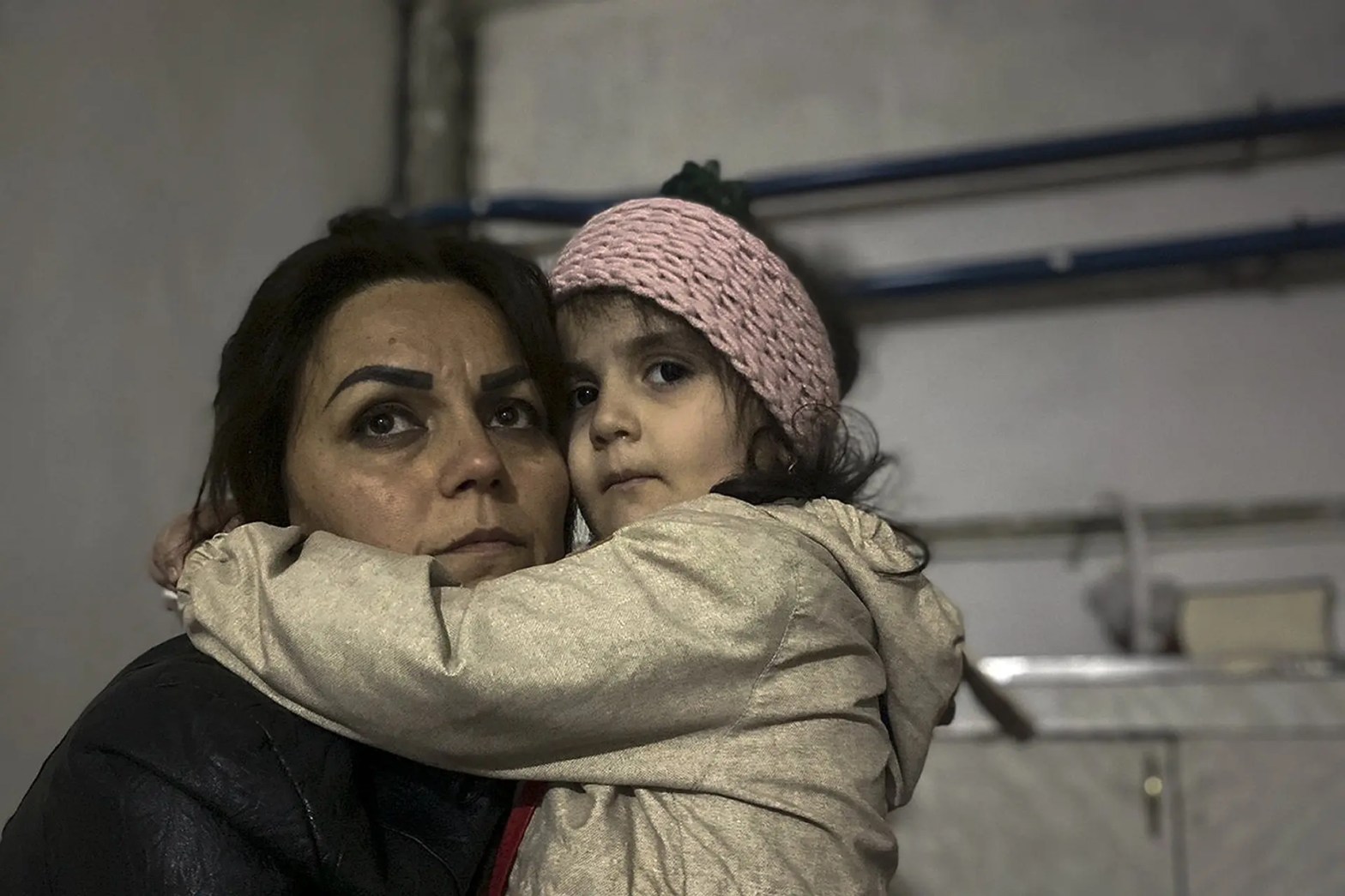
A conflic finds a horrifying end.
With Azerbaijan’s victory a few days ago, the Republic of Artsakh (Nagorno-Karabakh) will soon cease to exist, as confirmed by its president, Shakhramanyan. By 2024, there will be no Armenian government in the territory of Azerbaijan. 120.000 Armenians, roughly half the population of Artsakh, are now fleeing to Armenia proper, fearing further punishments from Baku either for involvement in the republic, the war, or simply for being Armenians. The destruction of cultural sites, the war crimes, and the continuation of hateful rhetoric and a century-old genocide should wound all humans, whether they are from Germany, Azerbaijan, or anywhere. To those that celebrate: Look into the mirror, you did not work with your fellow humans to find a solution, you celebrate thugs cutting off heads. That is not to let Armenia off the hook lightly, but to ask the question, why harden your heart like that against your neighbor? Because they have hardened their hearts? Then ask them the same. But until then, call what is happening by its name: Genocide.
The (hi)story, straight:
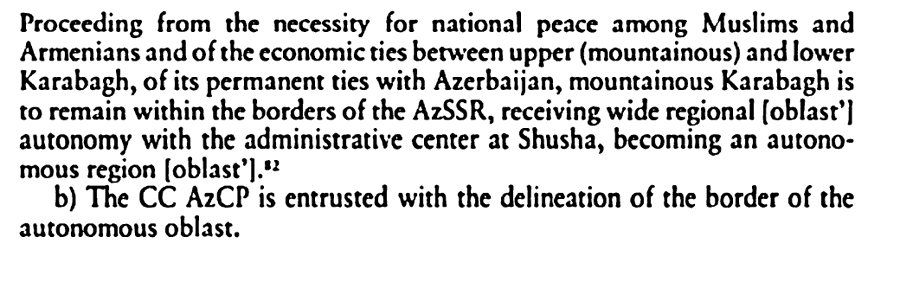
The area called Nagorno-Karabakh, which I will be calling Artsakh (the Armenian name of the region), has been part of Azerbaijan since its founding as the Azerbaijan Soviet Socialist Republic, though it has had ties with Baku since earlier. The modern conflict can be traced to the war between the two nations between 1918 and 1920, behind the curtains of the raging collapse of two large empires, the Russian and Ottoman empires, and World War I. The Bolshevik victory eventually led to the Red Army’s dominance in the Caucasus and Moscow’s control over both Armenia and Azerbaijan. But it was specifically the Kavbiuro, an organization tasked with issues of the Caucasus, that made the decision to give Artsakh to the newly forming Azerbaijan SSR on July 5th 1920, revising an earlier decision from July 3rd that would have given the area to Armenia. This decision proved notorious, especially in Armenian historiography. The reasoning? Complicated. The people of Artsakh, ethnic Armenians, wanted to join Armenia, but it was in fact true that the region had historic, economic, and administrative ties to Baku as well as an Azerbaijani minority. In a sense, it was an issue of self-determination versus territorial integrity. The Soviet decision was likely a way to keep balance in the region. Though the Artsakh Armenians did not get the best possible deal compared to other ethnic minorities in the formation of the USSR, the granting of autonomy should be seen as a better deal than what was previously on the table when the British forced Artsakh to bend the knee to Baku. Another theory, focuses on J. Stalin’s involvement is possible due to him being present during a July meeting, though there is no hard evidence of an order to the committee. Following this line of thinking makes it even harder to discern the actual motivations of any such decision.
Perhaps the details seemed irrelevant or secondary at a time when federalization was on the agenda for both countries. Regardless of intentions, federalization failed, and the issue of Artsakh reemerged during the USSR’s decline.
Militancy rose drastically in the 1980s during the USSR’s decline. Until it came to the First Karabakh War in 1988, pogroms in Baku and Khojaly left both sides injured, but despite an initial advantage by Baku, Armenia came out on top by 1994, gaining control of Artsakh and the surrounding areas in a quasi-annexation that was not internationally recognized. The conflict caused a population exchange between the two countries that displaced over 700.000 Azerbaijanis from Armenia and up to 500.000 Armenians from Azerbaijan. The Second Karabakh War in 2020 led to the Azerbaijani side winning, regaining control over many areas that were lost to Baku since 1988, but it also gave Azerbaijan the power over the lives of a population it deemed hostile. Unlike the First Karabakh War, a war between equals where both sides suffered what can be called ethnic cleansing by the mere outcome of the conflict, the Second War pitted a growing Azerbaijan against an increasingly isolated Armenia and left Artsakh encircled.
It is clear that the situation is complicated; not only was the first war an even greater driver of ethnic displacement, but also the Armenian government’s hardline rhetoric and international incompetency recently, which had left it without allies during the last two wars, essentially sabotaged peacemaking efforts. But does this excuse indifference by the Russian peacekeeping force, which seemingly did nothing to protect Artsakh? Or does it excuse the sudden change in Azerbaijan’s foreign policy, which in 2019 seemed to be focused on peaceful solutions only to turn within a year to an extent that suggests subterfuge? Or any of the following war crimes, death and destruction?
Sources:
1. https://armenian.usc.edu/qa-with-arsene-saparov-no-evidence-that-stalin-gave-karabakh-to-azerbaijan/
2. Audrey Altstadt, The Azerbaijani Turks, 1992, Hoover Institution Press Foundation
3. https://en.wikipedia.org/wiki/Khojaly_massacre
4. http://www.conflicts.rem33.com/images/Armenia/arm_geschichte.htm
5. https://shs.hal.science/halshs-01783416/document
6. https://books.google.gr/books/about/The_rights_of_man_what_are_they.html?id=VZ62swEACAAJ&redir_esc=y
7. “Armenia is not even a colony, it is not even worthy of being a servant. “ President Aliyev 2015 on twitter
8. https://eurasianet.org/pashinyan-calls-for-unification-between-armenia-and-karabakh
 Andrej Markov